Encounter with an Ancestor: Orville Rogers

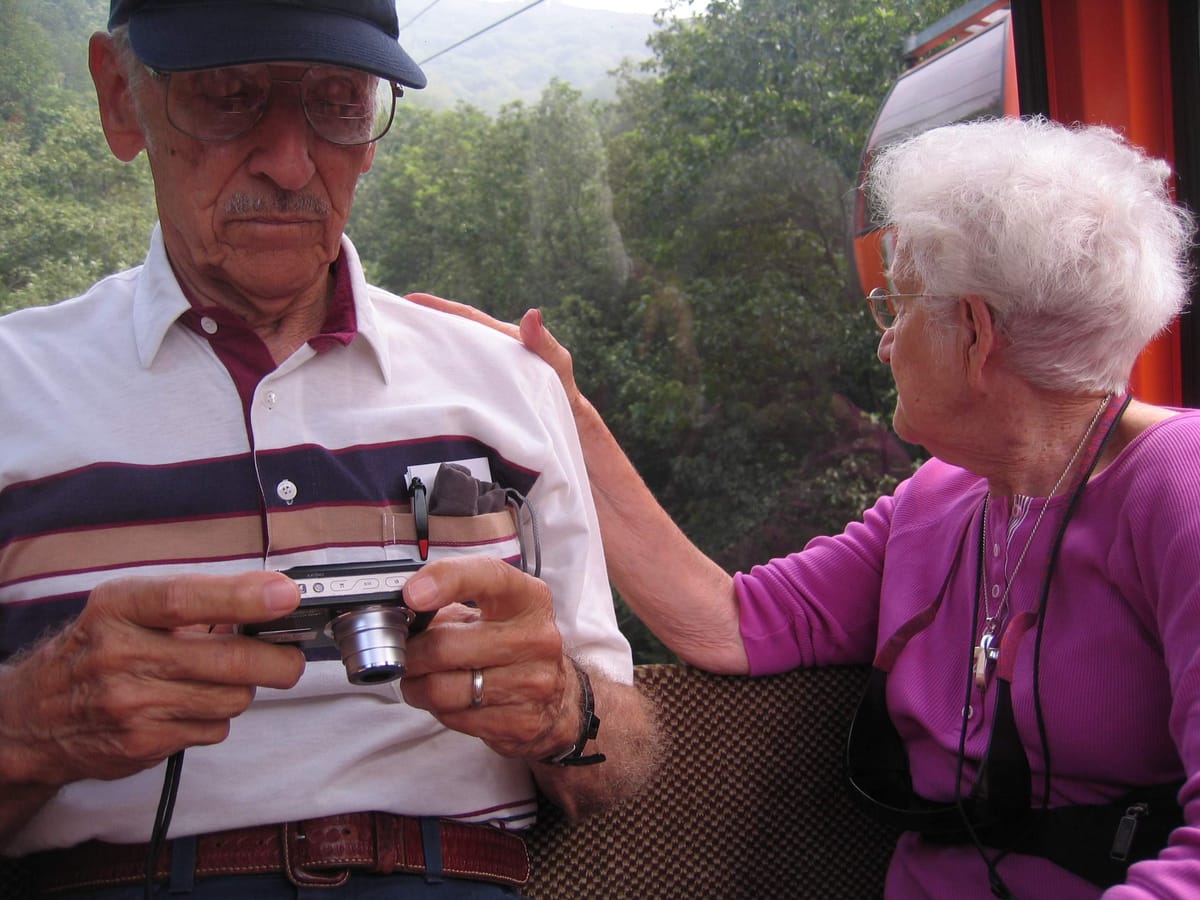
According to Granddad’s memoir, his own Granddad “cast a dark cloud over those around him,” and his home was accordingly cold. Granddad’s Dad had walked out when Granddad was barely old enough to remember, and he was raised by his mother and her parents in Oklahoma.
He was named after Orville Wright, the aviation pioneer. Throughout the Great Depression, Granddad always pointed up when he saw a plane in the sky, and by the time World War II began, he had already embraced his fate as a pilot.
Orville Rogers was a fit, no-nonsense man with a subtle mustache. He revealed his wild side through travel. After the war, he flew for Braniff Airlines, the hip “Virgin Airlines” of its day, famous for decorating its planes in solid colors, inside and out, so an orange-painted plane would be decked out with orange upholstery, everything orange—or green, or red, or purple, or brown, depending on the plane. He was never late for a flight.
He took a test twice a year, and if he failed, he would be furloughed for six months, until the next test. That seemed risky, so he took up investing as a second income-stream, reading Forbes and The Wall Street Journal for a year before putting in his first dollar. He got into the market at a good time, and he held on.
Back then, pilots were forced to retire at 60, which bumped him into career number two, early in his empty-nest period. Instead of sitting in a cockpit, he sat alone in his home office, a room in the middle of the house: in order to get to the office, you had to go through Granddad and Grandmom’s bedroom. He studied companies and made investments from there.
Every now and then, he’d take a crazy mission trip across the world in a tiny plane by himself. His book features a picture of him standing next to a single-propeller airplane, its doors open to reveal a massive fuel tank built into the backseat area of the plane. They had to remove the seats to make room for more fuel. He’s got a big smile on his face, ready for adventure, with nothing but paper maps and gauges and a radio (no GPS) for navigating to some of the world’s most remote runways, in places like the Amazon Rainforest, Papua New Guinea, Burkina Faso (in West Africa), and The Philippines. After delivering the plane to a missionary organization in that area, he’d catch a commercial flight back home to Texas.
He and Grandmom prided themselves on how much money they gave away, how little they lived on, and how every summer they treated their children, grandchildren, and eventually great-grandchildren to a family vacation, all expenses paid, to develop a family closeness that had been absent in his own upbringing.
So along with my siblings and parents and cousins and aunts and uncles and grandparents, I grew up traveling every summer. I turned five years old during a trip to Maine, and to prevent jealousy among siblings and cousins, our parents sang happy birthday to all of us, and all of the kids got presents. Every trip after that, for a decade or so, we’d do a birthday party for all the cousins, regardless of whether that trip coincided with anyone’s birthday.
We went to Mexico, Canada, Alaska, Hawaii, and various places throughout the US, and as we got older, we started traveling farther.
I remember Granddad announcing at one point, during a family trip in the late 1990’s, “some of you might be worried about the amount of money these trips are costing us, but I assure you that for every penny we spend on these trips, we’ve given much, much more money to work of the Lord.”
Granddad had invested in companies like CocaCola, Wal-Mart, and Johnson & Johnson, and as those companies expanded and expanded, their investments had grown. Grandmom and Granddad lived simple lives outside of their travels, staying in the same house they’d always lived in, where Grandmom mowed the lawn well into her 80’s.
They started to make more prominent gifts. Once they were featured on the cover of the Dallas Baptist University magazine, with Granddad holding one of those golden shovels for a groundbreaking ceremony.
During the year that we planned for a family vacation to the Baltic Sea, Grandmom became very sick, and took a trip to the ICU. Generally recovered but not in shape to travel, she and Granddad encouraged the rest of us to take the trip, while they stayed in Dallas.
That ICU experience came back to us years later, when Grandmom fell outside their house and had to go to the hospital, where they learned that she had sepsis, an infection in her blood. While recovering in the ICU, she turned to Granddad and said “we made an agreement that I would never come back here again.” Granddad was frozen, didn’t say anything. Nobody else knew anything about this apparent agreement.
Grandmom stopped eating, except for small bites that Uncle Bill slipped into her mouth while she slept. She was so clear about wanting to die that she said to my cousin, “If you go downstairs, there’s a man with a gun. Take the gun, and come shoot me in the head.”
I was in California at the time, and part of the story I heard over the phone was that she was “not Grandmom,” which hurt my feelings, because people are allowed to respond to their circumstances in ways that we might not expect them to.
Between the moment of her falling outside her house and the moment of dying, it was less than a few weeks. I flew to Texas for the funeral, where my dad said, “She taught me how to die.”
She was determined. She wanted to see her son who died in a Vietnam War helicopter crash. She did not have what I would imagine as “a good death,” considering she was in a hospital surrounded by people who, for the most part, wanted her to live. But she did not languish, the way I’ve seen people languish for years, in their own homes or in facilities.
At some point, someone referred to a poem called “The One Hoss Shay” by Oliver Wendell Homes, about a horsecart that’s built to last 100 years, then it falls apart all at once. That was their goal, Grandmom's and Granddad's, to stay in working condition until everything breaks down. In the brief moments of being alone with either of them, it wouldn’t be unusual for them to ask, “are you getting regular exercise?”
After Grandmom died, mobility became an even higher priority for Granddad, to the extent that when he turned 90 years old, he started winning world records for running.
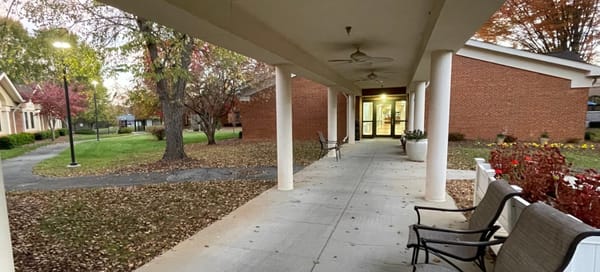
Granddad moved to an independent living facility that served two meals a day. He read the newspaper as a practice of keeping his mind sharp and staying aware of what’s happening in the world. He stayed active in his church, even as it invested in a massive and flashy downtown building that made him shake his head, and even as its senior pastor steered more attention toward Donald Trump.
Granddad’s death came not long after a heart surgery. The surgery was supposed to fix something that had been a challenge for him, I think it was a valve replacement. Rather than coming back from the surgery, he started a decline.
I’m wanting to say “started his descent” as a flying metaphor, but as much as anything, Granddad was ready for takeoff.
He stopped eating about a week before his death, just shy of his one-hundred-second birthday. The last time he was seen by his famous doctor, Kenneth Cooper, for whom Granddad had served as a poster-child of health, Dr Cooper encouraged Granddad to make a comeback.
Granddad had already stopped keeping up with Oklahoma Football, which to my Dad was a clear sign of letting go. Dr Cooper wasn’t ready to let go yet, and if I remember correctly, Dad called him, told him to come back and tell Granddad goodbye.
I didn’t serve as a caregiver for Grandmom or Granddad, except in tiny ways. Sometimes, for example, Granddad would accept my offer of an arm for stability while walking. Those moments of offering support to someone who supported me, those moments felt sacred and profound.